Core Services & Validations
We provide specialized chemical profiling and non-target screening (NTS) solutions across three core matrices, backed by rigorous scientific literature and peer-reviewed validations.
Characterization of Plant-Derived & Plant Based Products
We offer specialized chemical characterization for plant-derived raw materials, food products, and botanical extracts. Using advanced gas- and liquid chromatography coupled with high-resolution mass spectrometry, we map lipidic and polar profiles to verify purity, track degradation, and support product development. Our testing categories include:
Lipidic Bioactives in Plant-Derived Products
We offer comprehensive exploratory analysis, compound identification, and quantification for a subset of non-glyceridic lipids. Using high-temperature GC-MS approaches, we map sample profiles to assess raw material quality and characterization.
Analyte Focus
- Phytosterols: Including Δ7-sterols (e.g., spinasterol).
- Triterpenes: Pentacyclic and tetracyclic triterpene alcohols, along with their corresponding acetate and cinnamate esters.
- Tocopherols: Vitamin E isomers for quality control and shelf-life profiling.
- Fatty Acids & Esters: Free fatty acids (FFAs), fatty acid methyl esters (FAMEs), and fatty acid ethyl esters (FAEEs).
Identification & Quantification
We provide absolute quantification utilizing authentic chemical standards. For rare or commercially unavailable compounds, we utilize structurally and chemically related analogue standards, employing precise relative intensity correction factors derived from extensive MS library spectral data.
Polar Bioactives in Plant-Derived Products
We offer comprehensive exploratory analysis, compound identification, and quantification for a subset of phenolics and saponins. Utilizing reversed-phase ultra-high-pressure liquid chromatography and high-resolution mass spectrometry, we provide detailed profiling of polar secondary metabolites.
Analyte Focus
- Phenolics & Saponins: Profiling and relative quantitation.
- Monomeric Flavonoids: Highly targeted analysis (e.g., quercetin, luteolin).
- Flavornoid Glycosides: Characterization of polar secondary metabolites.
Identification & Quantification
Compounds are identified by retention times, high-resolution mass spectrometry fragmentation experiments, and comparisons to either mass spectral libraries or authentic standards (when available). For selected polar compounds, we offer targeted absolute quantification.
Qualitative Lipid Profiling
As a complementary service, we provide qualitative lipid profiling to observe general degradation patterns across samples. We extract LC-HRMS profiles to compare the overall integrity of the lipid matrix.
Matrix Assessment
- Neutral Lipids: Profiling of tri- and diglycerides to observe general degradation patterns.
- Polar Lipids: Profiling of glycolipids and phospholipids to compare the overall matrix integrity.
NTS as a decision-support tool for environmental quality
Traditional target analysis monitors only predefined contaminants. NTS Analytica uses chromatography and high-resolution mass spectrometry to characterize chemical fingerprints and detect, track and identify known and unknown organic micropollutants in environmental samples.
NTS as a decision-support tool for wastewater quality
What is in the wastewater?
- ▢ Characterize the chemical fingerprint of municipal and industrial wastewater beyond routine target lists.
- ▢ Detect compounds that are often poorly covered by standard methods, including very polar and volatile chemicals.
- ▢ Identify relevant compound groups such as pharmaceuticals and their metabolites and transformation products, pesticides, industrial additives, surfactants, PFAS, corrosion inhibitors.
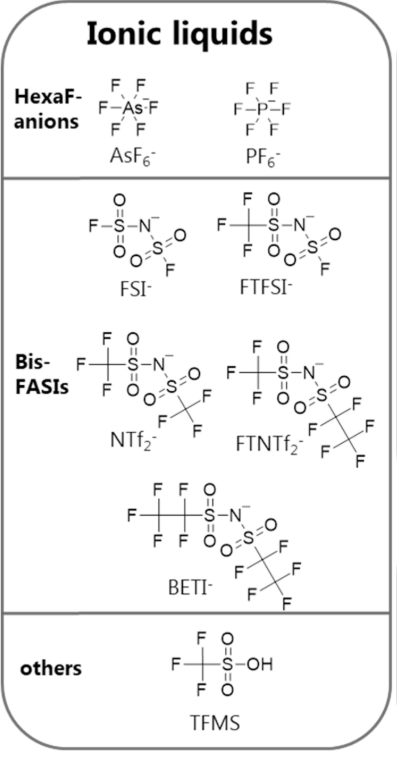
Figure 1: Example of rarely detected or newly identified chemicals of the compound class "ionic liquids" in wastewater, whose fate can be tracked throughout the wastewater treatment process. Modified from Tisler et al., 2025b.
Where do the chemicals come from?
- ▢ Use chemical fingerprints for source tracking of industrial spills, pinpointing discharges and other contamination events.
- ▢ Distinguish between municipal and industrial contributions based on characteristic chemical profiles.
- ▢ Identify likely sources or industrial sectors behind unknown discharges without predefined target lists.
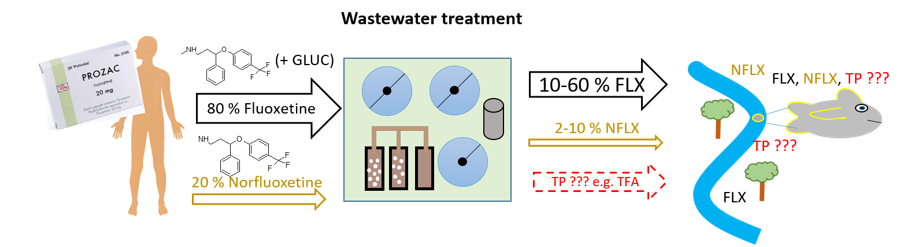
Figure 2: Identification of chemicals before and after wastewater treatment, as well as in the environment (e.g., fate of the pharmaceutical Fluoxetine). Modified from Tisler et al., 2019.
What happens during wastewater treatment?
- ▢ Track changes in the chemical fingerprint through treatment: which compounds are removed, persist, or form as transformation products.
- ▢ Evaluate treatment performance beyond a limited set of target compounds.
- ▢ Identify compounds that pass through treatment and may reach receiving waters.
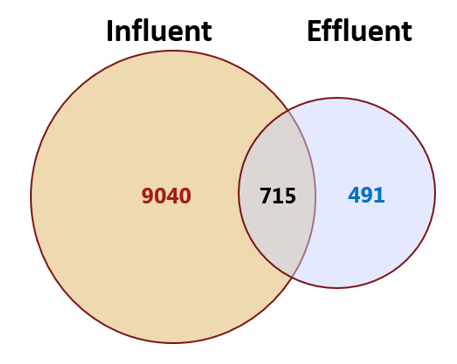
Figure 3: Example of simple NTS evaluation based on chromatographic peaks to evaluate treatment performance. Modified from Tisler et al., 2022b.
How does the chemical profile change over time?
Monitor temporal variation in discharge composition to detect seasonal patterns, process changes, or irregular emission events. Follow the evolution of industrial effluent over time to assess compliance, and establish chemical baselines that enable early warning when unexpected substances enter the system.
NTS as decision support tool for drinking water quality
What is in the drinking water?
- ▢ Find, prioritize, and act on unknown contaminants that routine target lists miss.
- ▢ Support early warning for emerging contaminants, and guide follow-up decisions such as confirmation, treatment evaluation, and monitoring design.
- ▢ Example compounds: unconventional PFAS, pesticide transformation products/metabolites, plasticizer.
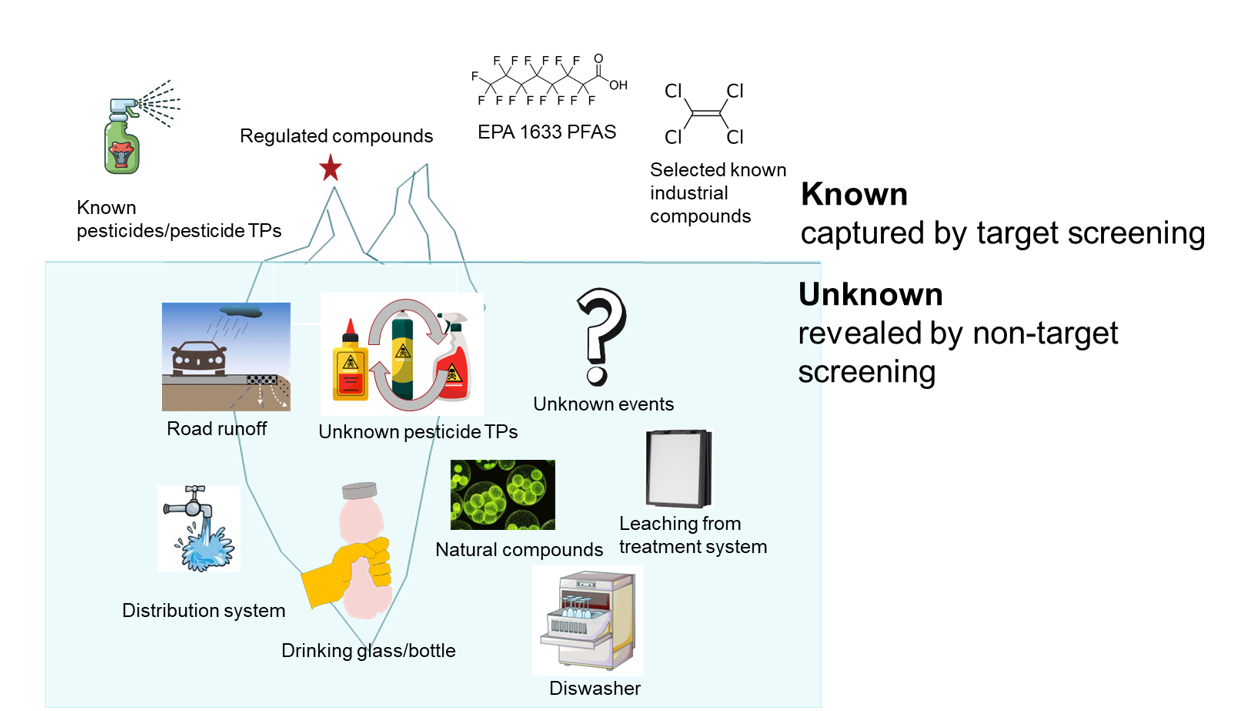
Figure 1: Example of known and unknown compounds occurring in drinking water. Modified from Tisler et al., 2025.
What happens in drinking water treatment?
- ▢ Track the fate of the chemical fingerprint: how many features are degraded, stable, or formed in the treatment process.
- ▢ Follow the fate of identified contaminants.
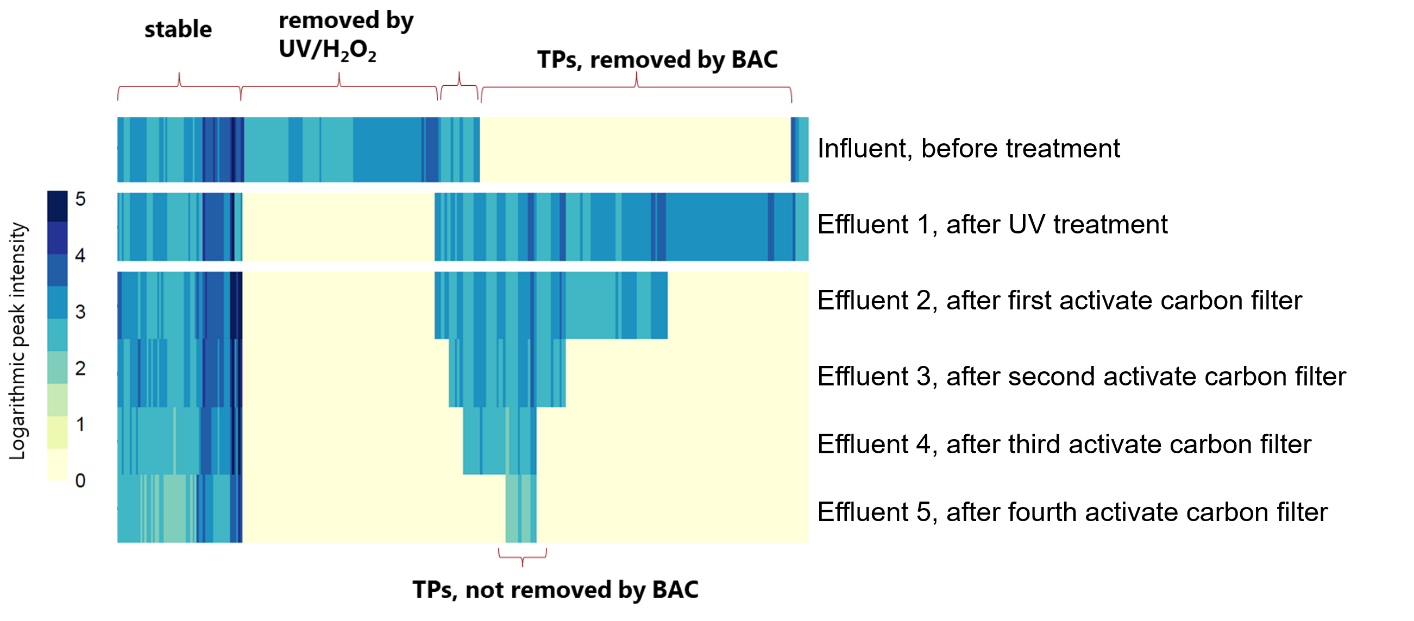
Figure 2: Micropollutant and transformation product fate mapping through advanced oxidation processes and activated carbon filtration. Modified from Tisler et al., 2022.

Figure 3: Chemical fingerprinting showing the migration of rubber compounds (from seals) and plasticizers in a high-density polyethylene (HDPE) drinking water distribution system. Modified from Diera et al., 2023.